Professional Work
SpaceX’s “Raptor”
The first full-flow staged-combustion rocket engine in the world.
-
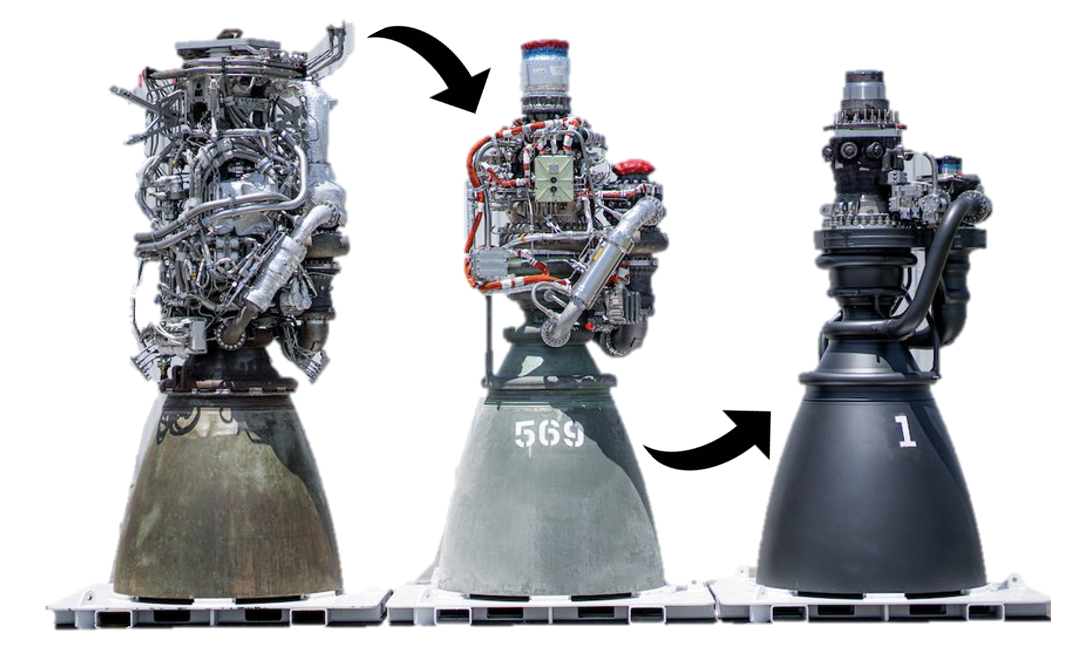
Raptor 1
My project was to take the ignition of the Raptor engine simpler and more robust. In a matter of months, I had mobilized across several teams to design, CAD, computationally analyze, additively print, machine, create a test campaign, rig up, experiment, evaluate, and show proof of concept of direct spark ignition for the Mars rocket engine. This propulsion development project was niche and scrappy, and I fully owned it from the first sketch on paper to the end of physical testing. I learned that starting from first principles and applying intelligent assumptions can allow simpler models to suffice for development testing in lieu of computationally expensive models.
-
Raptor 1 —> 2
I was the responsible engineer for the main oxidizer valve, one of the four main valves on Raptor. I headed design, development, and root-cause investigations for over 300 main oxidizer valves across 40 engines while simultaneously coordinating with manufacturing, production, off-site testing, and systems engineering teams for day-to-day operations. I designed the thermal protections for the valves for the first orbital flight of Starship and was a part of a tiger team that condensed six valves into one complex manifold to simplify the Raptor engine, reducing the amount of tubing routing propellant in the engine by 66%. This role highlighted a knack I have for multi-team operations. My love for learning often lands me across the table from someone asking for the whatand why of their work – the ‘what’ helps me get everyone on the same timeline and the ‘why’ allows me to be proactive about future decisions. It takes a team to create a breakthrough, and through this experience I gained knowledge on how to work on multiple teams across multiple disciplines.
-
Raptor 2 —> 3
My role was to create a quasi-equilibrium, 1D meanline model that simultaneously solved the axial thrust balance and recirculation flows for the oxidizer and fuel turbopumps. I started by examining the existing meanline code, akin to a literature review, noticing how much of the code came from one individual carrying along certain approaches and industry know-how rather than through fundamentals. Rather than writing wrappers that would build upon a shaky foundation, I chose to rewrite the entire model and let textbooks guide how I structured the code. Realizing that the properties of the output fluid were the importance of a pump model, I increased performance of the code significantly by only retaining information of the working fluid as it went through each stage of the pump. From constantly touching base with the responsible engineers that would use the model, I designed my code to be modular to open up the design space and speed at which users could iterate through different turbopump configurations. A tool is only useful if it is used, so broadening the scope was an important factor in the creation of the meanline model. Anchored on test data, the results proved to be similar to what was seen on the engine stand, further validating the model’s future impact on all of SpaceX’s turbomachinery next-generation designs.
NASA’s Artemis Program
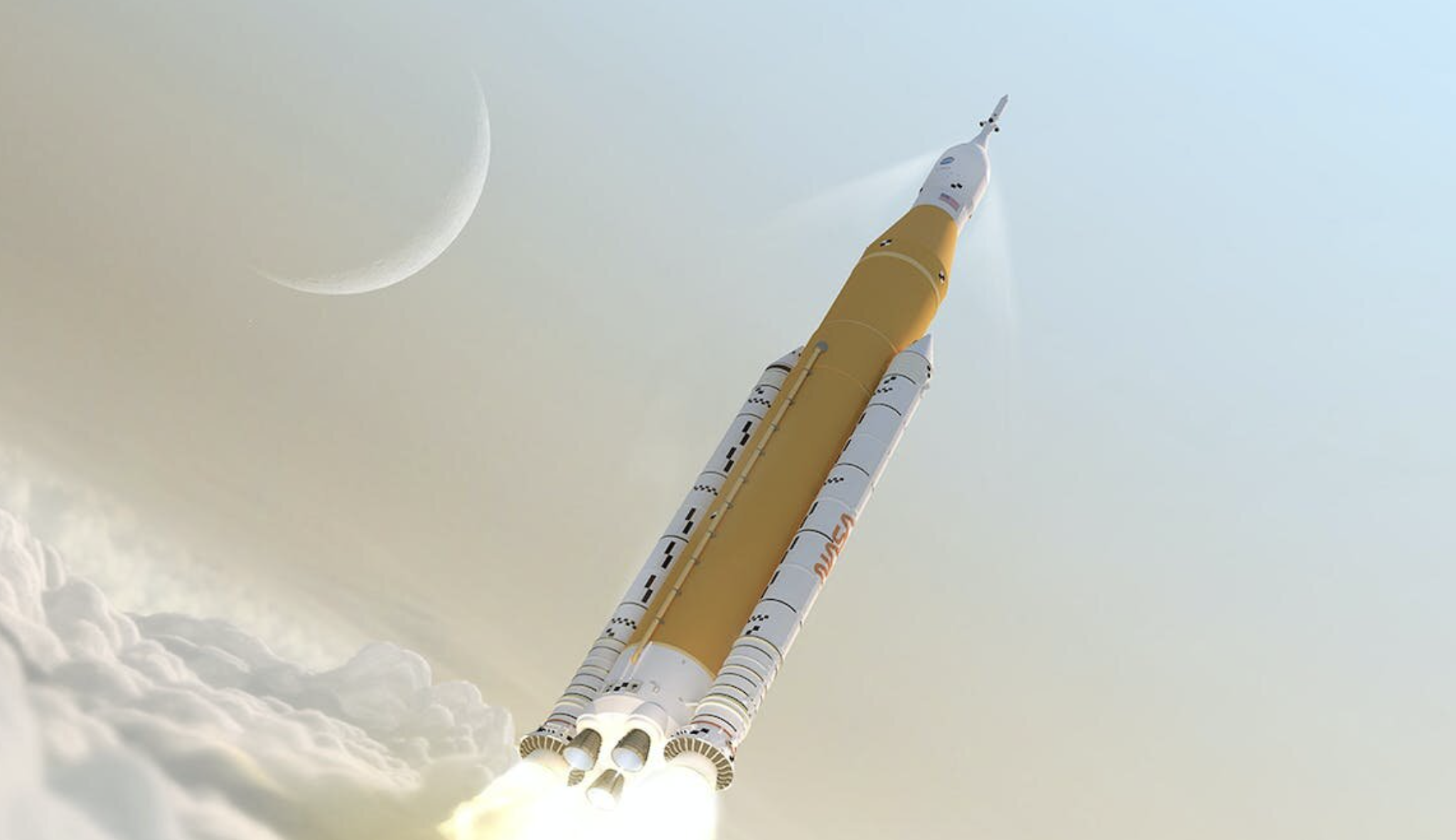
Validating the European Service Module under a new flight envelope.
-
I was a propulsion intern at NASA Glenn Research Center working to validate the performance of the gimbal, a Shuttle heritage solution for the Orion spacecraft in NASA’s Artemis Moon to Mars program. I ran tests varying thrust load, angular velocity, and temperature for qualification and acceptance testing based on the requirements of the new mission. An investigation of contradictory position data found the laser and disk of the angle encoder misaligned when under 6,000+ lbf of thrust, outputting correct linear but incorrect angular position data. Rather than running another expensive test, I adapted the Newton-Raphson root-finding estimation technique to solve an implicit equation I derived for a 2-arm pneumatic actuator to relate the accurate linear position to angular position saving hundreds of thousands of dollars for NASA, an accomplishment that made me a Top 40 intern at NASA that summer. In research, one frequently must change viewpoints and measurements to get to the data and insights needed, adapting data acquisition to available facilities to avoid purchase of expensive equipment or long wait times for specific facilities unnecessarily.
Jet Propulsion Laboratory’s NEOWISE satellite
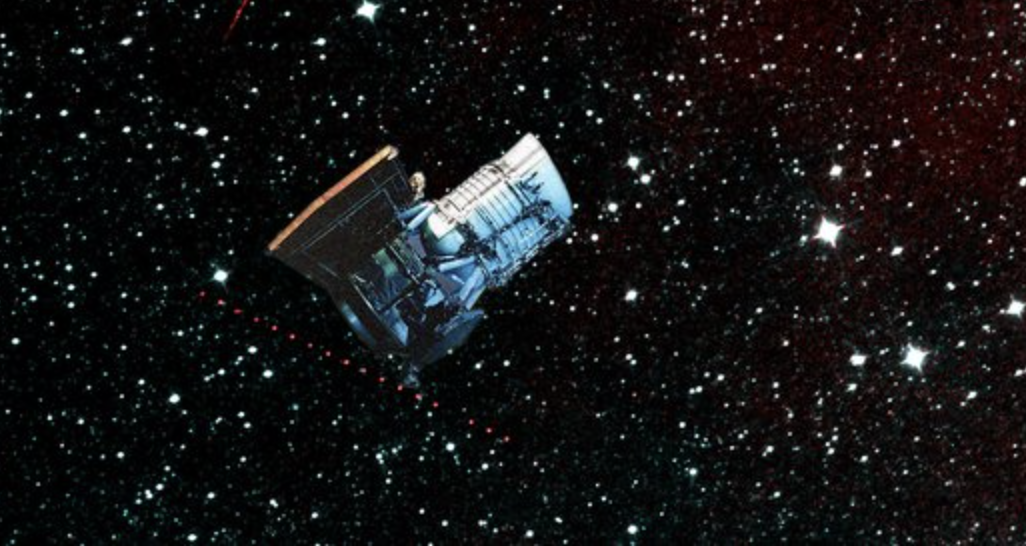
Characterizing thousands of asteroids to protect Earth.
-
Under the legendary Amy Mainzer, I worked as part of the Near-Earth Object Wide-field Infrared Survey Explorer (NEOWISE) team at the Jet Propulsion Laboratory to assess the risk of asteroid strikes on Earth. Programming in C++ and using other tools I developed, I correlated different large data sets to identify potential asteroids and if authenticated, assessed whether they were an object of note. My approach resulted in close to 80 new asteroid candidates and my contribution led to me being a co-author of two papers published in the Astronomical Journal. In my free hours, I conducted an independent research project on the relationship of dust and carbon monoxide and dioxide depletion rates in Encke class comets. I hypothesized that the sublimation rate of carbon monoxide and dioxide could aid in establishing the history of our solar system since present-day carbon content could be related to the comets’ heliocentric distances at the formation of the solar system. Both projects taught me how to break a seemingly impossible challenge into bite-sized pieces that can be solved methodically, an essential skill when researching problems with unknown answers.
BryceTech
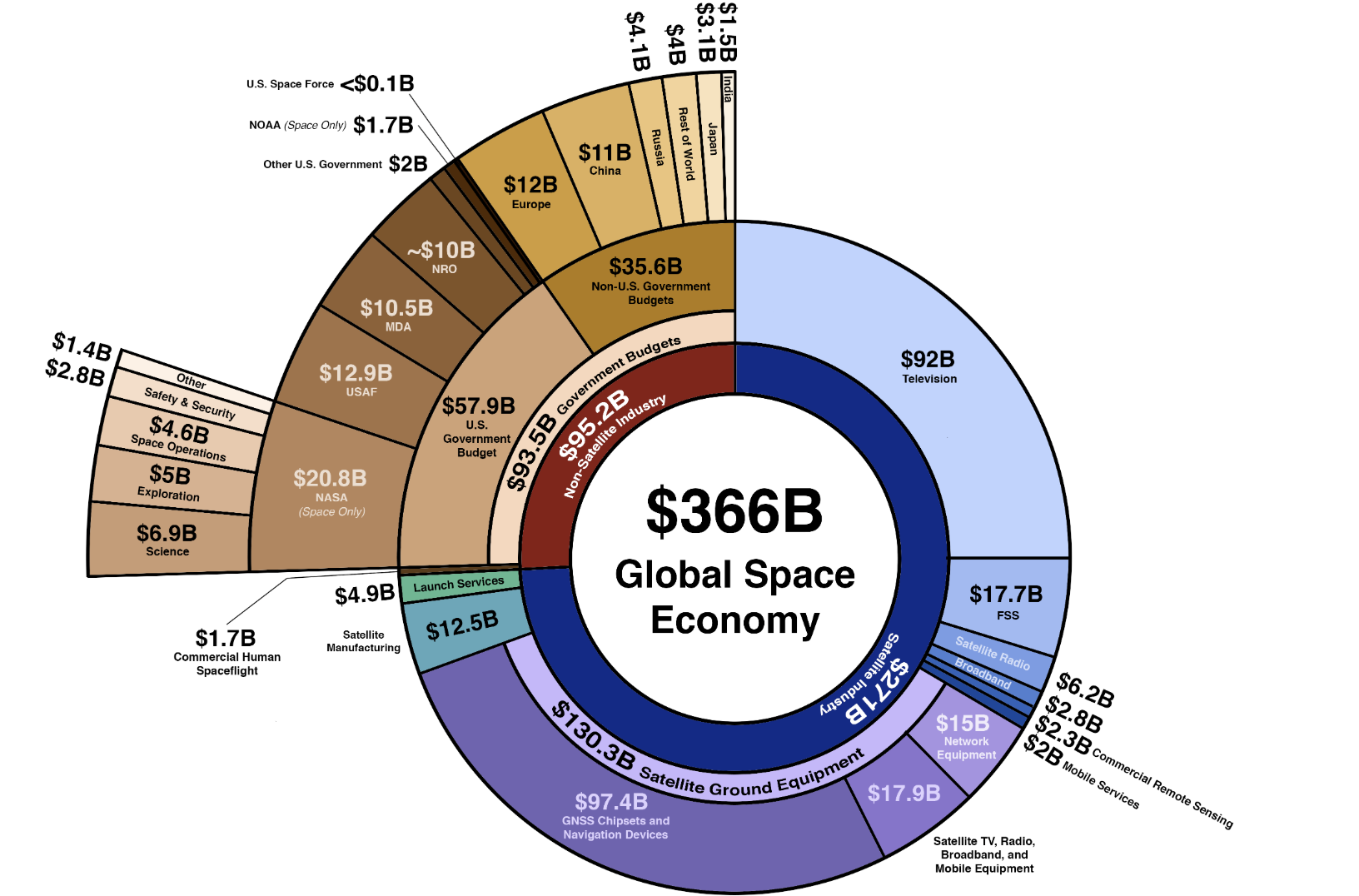
Modeling the future of the global aerospace economy.
-
Curious about the commercial side of the aerospace industry, I worked at BryceTech, a defense and aerospace consulting start-up. I used research-based models and data-driven analysis to predict critical outcomes for clients such as NASA, the Federal Aviation Administration, the Satellite Industry Association, and private clients. I learned to argue a case, write technical reports, and respond to industry request for proposals. It prepared me for graduate research by making me a more effective communicator of technical information, visually and verbally.